
Oct 25, 2026 by Anthony York (YorkSoft Ltd)
Last Updated: 24 October 2026
Quick Summary
AI competitive analysis local SEO helps you understand what competitors rank for, how they optimise their Google Business Profile, and where they appear in AI-generated search results, giving you a strategic edge to dominate both traditional and AI search visibility in your local market.
Using AI competitive analysis local SEO techniques has become essential for businesses competing in crowded local markets. When you understand what your competitors rank for, how they optimise their Google Business Profile, and where they appear in AI-generated search results, you gain a strategic edge that traditional SEO alone cannot provide.
Local search is changing. Customers now see AI summaries alongside traditional search results, and these summaries pull information from multiple sources. A business that ranks well in Google but doesn't appear in AI results is missing visibility. This is where AI competitive analysis steps in.
Consider Kettering Motorist Centre. Operating in a highly competitive automotive repair sector, the business faced dozens of local competitors all vying for the same search terms. To stand out, they needed to dominate not just traditional search rankings but also appear prominently in AI-generated answers. Without understanding competitor strategies, that goal would have been impossible.
At YorkSoft Ltd, we help local businesses like this one use AI to analyse competitor data, spot gaps in their strategies, and build a roadmap to outrank rivals. The difference between guessing and knowing is measurable, and it starts with structured competitive analysis.
Local SEO competitor analysis means studying how your rivals optimise their online presence for local search. This includes their Google Business Profile setup, the keywords they target, their citation consistency, review strategy, and how they appear in AI results.
Traditional competitor analysis stops at keyword rankings. Modern analysis goes deeper.
You need to know:
AI tools accelerate this process. Instead of manually checking each competitor's website and Google Business Profile, AI can scan multiple sources, extract data, and flag patterns in minutes. This speed means you can act faster than competitors can react.
For businesses around Northampton and beyond, this competitive intelligence becomes the foundation for every local SEO decision you make.
Start by defining who your actual competitors are. This is not always obvious.
Many businesses assume their competitors are the ones they see on page one of Google. That's a starting point, but not the whole picture. AI competitive analysis for local SEO requires you to identify three types of competitors:
Direct competitors rank for the same keywords and serve the same geographic area. If you're a plumber in Northampton, other plumbers in Northampton are direct competitors.
Indirect competitors offer similar services but may target different keywords or slightly different service areas. A plumber offering emergency drain cleaning competes with plumbers offering general plumbing, even if their keyword focus differs.
Emerging competitors are businesses not yet on page one but gaining visibility. AI tools can spot these before they become a threat.
To identify competitors, start with your core service keywords. Search "[Your Service] near me" and "[Your Service] in [Your City]" and note the businesses appearing in the top ten results. Then use AI SEO tools to expand this list by finding businesses ranking for related keywords.
Document each competitor's:
This list becomes your competitive set for ongoing analysis.
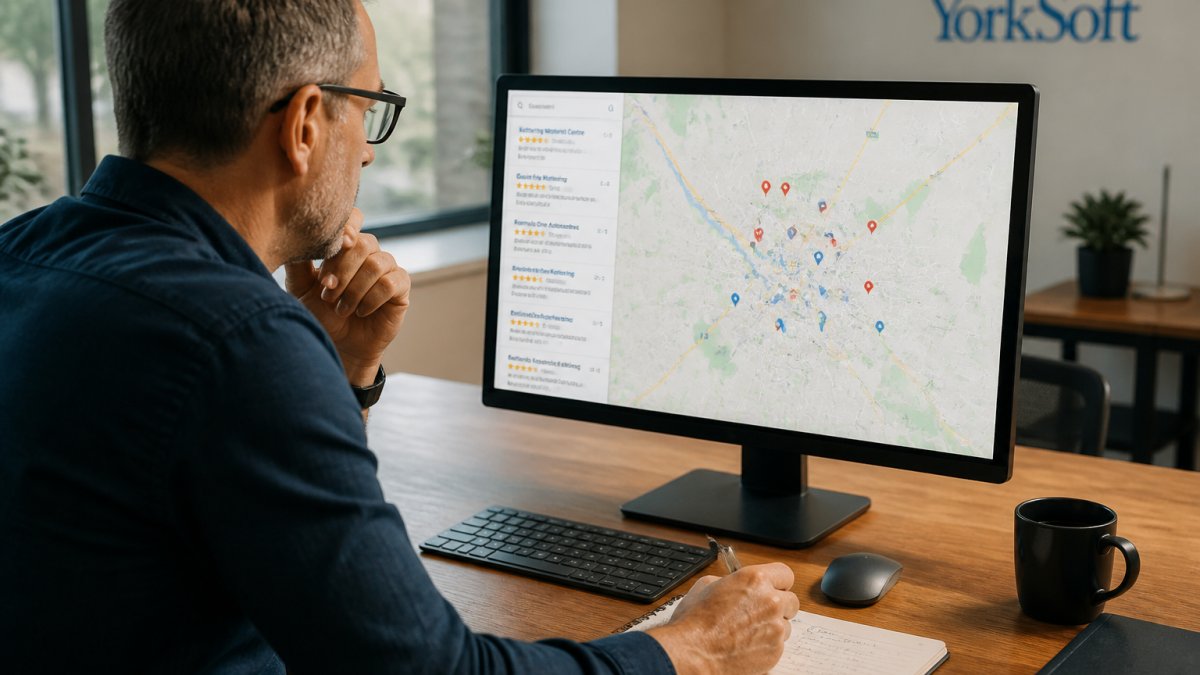
Your Google Business Profile is often the most visible part of your local SEO presence. Competitors know this, and so should you.
Analyse each competitor's Google Business Profile by checking:
Profile completeness. Is their profile fully filled out? Do they have a business description, all service categories listed, opening hours, and contact information? Incomplete profiles rank lower.
Review strategy. How many reviews do they have? What's their average rating? How recently do reviews appear? Businesses with consistent, recent reviews outrank those with old or sparse reviews.
Photos and videos. Do they upload regular photos? Do they respond to customer photos? Visual content signals active management and boosts visibility.
Posts and updates. Google Business Profile allows posts about events, offers, and updates. Competitors posting regularly signal freshness to Google's algorithm.
Q&A section. Are they answering customer questions? This content can rank in search results and helps customers find answers before they visit your site.
When you analyse competitor Google Business Profiles, you're not copying them; you're identifying gaps. If a competitor has 200 reviews and you have 50, that's a gap. If they post weekly and you post monthly, that's a gap. Close these gaps, and you improve your competitive position.
AI is reshaping how people find local businesses. Google's AI overviews now appear above traditional search results, pulling information from multiple sources to answer user queries directly.
A business that doesn't appear in AI overviews is invisible to a growing segment of searchers.
To monitor AI visibility, check where your business and competitors appear in:
Google AI overviews. Search your core keywords and note which businesses appear in the AI summary. Are you there? Are your competitors?
AI-generated local recommendations. Some AI systems generate "best of" lists for local searches. Tracking these helps you understand how AI systems perceive your business relative to competitors.
Featured snippets. These often feed into AI summaries. If your content appears in a featured snippet, it's more likely to be cited in AI results.
Review aggregator platforms. AI systems pull reviews from multiple sources. Ensure your business is listed and optimised on major review platforms.
Monitor these weekly. Set up alerts for your business name and core keywords. When you appear in new AI results or lose visibility, you'll know immediately and can adjust your strategy.
Create a spreadsheet or document to track competitor data over time. This template becomes your competitive intelligence hub.
| Competitor Name | Core Keywords | Google Rank (Position 1-10) | Google Business Profile Reviews | Recent Posts (Y/N) | AI Overview Appearance | Notes |
|---|---|---|---|---|---|---|
| Competitor A | Plumber Northampton, Emergency plumbing | 2, 5 | 187 reviews, 4.8 stars | Yes | Appears in AI summary | Active review strategy |
| Competitor B | Local plumber, Drain cleaning | 3, 7 | 92 reviews, 4.6 stars | No | Does not appear | Needs more reviews |
Update this template monthly. Track:
Over time, patterns emerge. You'll see which strategies work, which don't, and where opportunities exist. This data informs every decision, from which keywords to target, to how often you should post, to where you should build citations.
Many tools claim to offer AI competitive analysis local SEO capabilities. Explore AI-driven competitive keyword analysis tools and detailed comparisons to find the right solution for your business. The right choice depends on your budget, technical comfort, and specific needs.
When evaluating tools, prioritise these capabilities:
Competitor tracking. Can the tool monitor multiple competitors' rankings, Google Business Profile changes, and review activity automatically?
AI visibility monitoring. Does it track where you and competitors appear in AI overviews and featured snippets?
Local citation auditing. Can it verify your NAP data across directories and flag inconsistencies?
Keyword research with local intent. Does it identify keywords people search for in your specific geographic area?
Reporting and alerts. Can you set up automated reports and receive alerts when competitors make significant changes?
At YorkSoft Ltd, we provide SEO services that include competitive analysis, keyword research, and rank monitoring tailored to local businesses. Our approach combines AI-driven insights with hands-on strategy to help you outrank competitors in both traditional search and AI results.
Rather than relying on generic tools, many businesses benefit from working with specialists who understand their market. We've helped clients like Kettering Motorist Centre dominate their local search landscape by combining AI analysis with strategic implementation.
Begin with a clear objective. Are you trying to rank for a specific keyword? Improve your Google Business Profile visibility? Appear more often in AI summaries? Your goal shapes your analysis.
Next, document your three to five main competitors. Run them through the analysis steps above: identify their keywords, audit their Google Business Profile, check their AI visibility, and build your tracking template.
Then, identify three to five gaps, areas where competitors outrank you or where you can differentiate. These gaps become your action items. Maybe it's review generation. Maybe it's more frequent Google Business Profile posts. Maybe it's building citations in directories where competitors are listed but you're not.
Finally, implement changes based on your findings. If competitors have 50% more reviews than you, invest in a review generation campaign. If they post weekly and you post monthly, increase your posting frequency.
How to Improve Local SEO Performance: 2026 UK Guide provides a comprehensive roadmap for implementing these improvements. For service businesses like automotive repair shops, Improve Local SEO for Garages: A 2026 Guide offers industry-specific tactics.
The businesses winning in local search today are those using AI to understand their competitive landscape, and then acting faster than competitors can respond. Kettering Motorist Centre succeeded because they didn't just track rankings; they understood why competitors ranked and what it took to surpass them.
Start your competitive analysis this week. The insights you gain will shape your local SEO strategy for months to come.
AI competitive analysis transforms local SEO from guesswork into strategy. You'll understand your competitive position, spot opportunities competitors miss, and build a roadmap to dominate your local market. YorkSoft Ltd specialises in helping local businesses implement these insights through AI-driven competitive keyword analysis, rank monitoring, and strategic SEO execution.
Start by identifying which businesses rank above you for your target keywords in local search results and Google Business Profile listings. Use AI tools to extract their keyword rankings, review counts, citation patterns, and content strategy. Document their strengths and gaps systematically, this forms your competitive baseline. Track changes monthly to spot when competitors shift strategy or when your own ranking position moves relative to theirs.
Compare keyword rankings across your target search terms, Google Business Profile optimisation (category selection, photo count, review frequency), backlink profiles and citation consistency across local directories, content topics and freshness, review sentiment and response rates, and their visibility in AI-generated search summaries. These factors collectively determine whether they outrank you and where your opportunities lie to reclaim visibility.
AI automates the collection and analysis of competitor data that would take hours manually. It identifies patterns in keyword rankings, predicts which competitor tactics are driving their visibility, monitors changes in real time, and highlights gaps in your own strategy. AI also tracks your visibility in AI-generated search results, a growing factor in local search, and surfaces emerging competitors before they dominate your market.
Yes. AI analysis reveals what your competitors are doing with their Google Business Profile, category selection, post frequency, review management, and Q&A engagement. By comparing your profile against theirs, you can identify missing optimisations. AI also helps you prioritise which improvements will have the highest impact on your local rankings and which keywords your profile should target based on search volume and competition.