Aug 28, 2026 by Anthony York (YorkSoft Ltd)
Last Updated: August 28, 2026
Non-profits face a unique digital challenge. Your website must inspire donors, serve beneficiaries, process transactions, manage volunteers, and communicate impact simultaneously. Yet 99% of UK charities are online, and many still struggle with outdated, ineffective websites that fail to drive their mission forward, according to The Access Group's 2025 research.
Off-the-shelf platforms impose rigid structures that rarely fit the complexity of your operations. A custom solution built specifically for how your charity works eliminates friction at every point, from donor onboarding to volunteer scheduling to impact reporting.
According to Grinning Graphics' 2024 study, 75% of people judge an organisation's credibility based on website design. A poorly designed site signals mismanagement. A thoughtfully built custom site signals competence and trustworthiness.
At YorkSoft Ltd, we provide comprehensive digital solutions specializing in web development and custom web applications. We empower businesses to enhance their online presence through expert SEO / AEO and GEO strategies, including rank monitoring, keyword analysis, and high-quality link building and AI analysis and monitoring. YorkSoft is dedicated to delivering technical excellence and competitive insights to help your brand succeed in a crowded digital landscape. The organisations that thrive aren't using generic website builders. They're using custom web development platforms tailored to their specific workflows, integrated with their existing systems, and optimised for the exact outcomes they're chasing.
Accessibility isn't optional. In 2026, adherence to WCAG 2.1 compliance is mandatory for non-profit web projects, according to The Charity Design Co's 2026 guidance. This ensures equitable access for users with visual impairments, hearing loss, motor disabilities, and cognitive differences.
Under the Equality Act 2010, charities have a duty to make reasonable adjustments to ensure disabled people can access your services. Your website is part of that service. Failing to meet accessibility standards exposes your organisation to legal risk and excludes the very people you're trying to serve.
WCAG 2.1 covers four core principles: perceivable (users can see and hear content), operable (users can navigate with keyboard and assistive technology), understandable (content is clear and predictable), and robust (it works across devices and assistive tools).
Custom web development gives you control over every layer. You can implement high-contrast text, ensure proper heading hierarchy for screen readers, add alt text to images automatically, enable keyboard navigation throughout, and test against real assistive technologies. A templated solution often locks you out of these decisions.
Accessible websites perform better for everyone. Clear navigation, readable fonts, and logical structure benefit all visitors. You're not building two websites; you're building one that works universally.
Your donor management system tracks giving history, engagement level, communication preferences, and relationship stage. Most charities run their website separately from their donor database, forcing staff to manually sync information between systems.
Custom web development solves this friction point. A bespoke website integrates directly with your CRM, whether Salesforce, Raiser's Edge, or another platform, so that every donation, volunteer signup, and event registration flows directly into your database without manual entry.
Donors see personalised acknowledgements based on their giving history. Volunteers receive role-matched opportunities. Staff spend less time on data entry and more time on relationship building. Your fundraising team gets real-time visibility into which campaigns are converting.
Integration enables smarter automation. A donor giving £500 annually can be automatically enrolled in a VIP communications stream. A volunteer signing up through your website can receive a welcome email sequence without human intervention. A lapsed donor can trigger a re-engagement campaign based on giving patterns.
A custom solution uses APIs to sync data bidirectionally, eliminating the data silos that plague charities using disconnected tools.
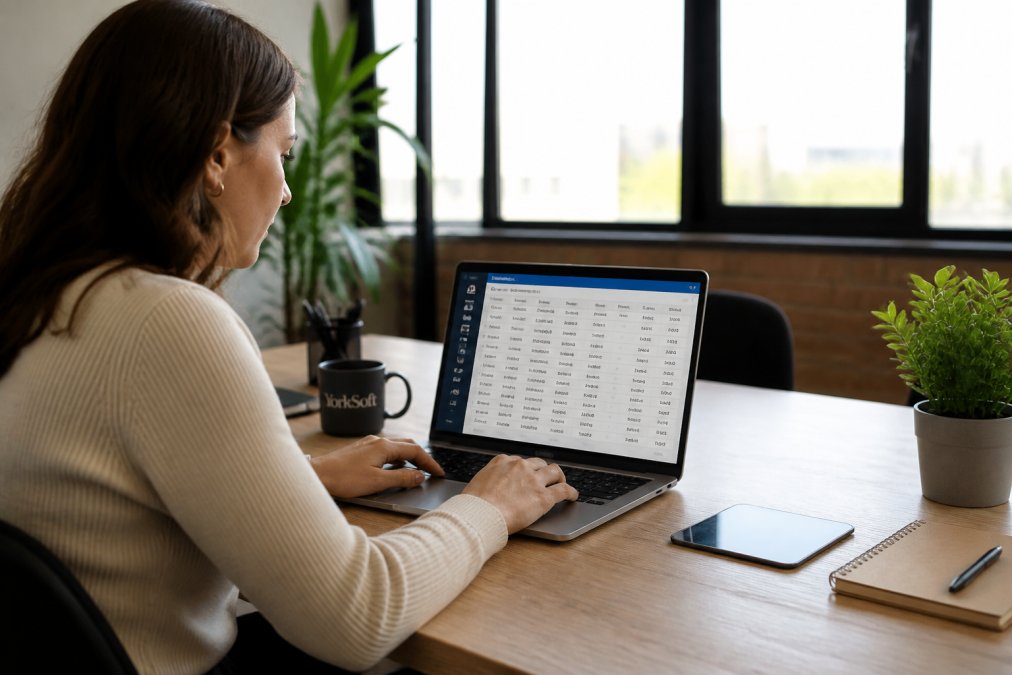
YorkSoft Ltd specialises in integrating donor management systems with custom websites, ensuring your digital infrastructure works as one cohesive unit rather than fragmented pieces. The result is faster fundraising cycles, better donor relationships, and fewer operational bottlenecks.
Cost is the question every charity asks first. Custom web development requires investment, but understanding what you're paying for helps separate genuine value from inflated pricing.
Professional website development in the UK typically ranges for a custom business website. More complex custom solutions with database integration, donor management system connectivity, and advanced functionality can range significantly higher.
For non-profits specifically, several factors affect pricing:
Scope and complexity. A simple informational site costs less than one with donation processing, volunteer management, and event registration. Each additional system integration adds cost and value.
Custom functionality. Off-the-shelf features are cheaper than bespoke ones. Unique workflows, such as a specific volunteer matching algorithm or custom impact reporting dashboard, require more investment.
Ongoing maintenance. Custom solutions require ongoing support, security updates, and occasional enhancements. Budget for annual maintenance separately from the initial build.
Timeline. Realistic development schedules that allow for proper testing, accessibility compliance, and integration work cost less than compressed timelines.
The hidden cost of cheap solutions is often higher. A website built on a free template locks you into rigid structures, offers poor SEO performance, and becomes expensive to modify as your needs evolve. A custom build designed for your specific workflows costs less to own over five years.
Many UK charities qualify for grants or donor funding to cover digital infrastructure costs. Funders increasingly recognise that digital investment is operational necessity. When scoping your project, include the cost conversation early; a good developer will help you right-size the investment to your budget and phase it if needed.
Your website won't drive donations if donors can't find it. SEO for non-profit organisations differs from commercial SEO because your conversion goal is engagement, trust, and support rather than sales.
Non-profits often compete for attention in crowded spaces. If you're a mental health charity, you're competing against NHS resources, commercial platforms, and dozens of other charities. Search visibility is essential.
Custom web development provides the technical foundation that SEO requires. A properly structured website with clean HTML architecture, fast page load speeds, and semantic markup ranks better than a template-based site. Search engines favour sites built with technical precision.
Keyword strategy. Target keywords your donors and beneficiaries actually use. "Mental health support in Northampton" likely drives more relevant traffic than generic terms. Long-tail, location-specific keywords often have less competition and higher intent.
Content structure. Organise your site so each page targets a specific audience: donors, volunteers, beneficiaries, professionals. Clear navigation and logical hierarchy help both users and search engines.
Page speed. Slow sites rank lower and lose visitors. Custom-built sites typically load faster because they include only what you need.
Backlink strategy. Non-profits have natural link opportunities: local media coverage, funder websites, partner organisations. A developer who understands technical SEO ensures your site is structured to attract and benefit from these links.
Schema markup. Structured data helps search engines understand your organisation. Charities implementing schema correctly see better visibility in local search results.
YorkSoft Ltd combines custom web development with technical SEO expertise, ensuring your site ranks well. Our approach includes rank monitoring, keyword analysis, and competitive insights so you understand exactly how your digital presence performs.
A non-profit website must serve multiple audiences simultaneously. Beneficiaries need to find help. Donors need to understand impact. Volunteers need clear pathways to contribute. Professionals and partners need data and resources.
The most effective non-profit websites use modular layouts that guide each audience to what they need. Most charities have at least three major audience groups, and the modern approach uses modular page sections and navigation patterns that help each audience get where they need quickly.
Donation system. This must be frictionless. Optimised donation pages can increase conversion rates significantly. Include suggested donation amounts, clear impact statements, multiple payment options, recurring giving options, trust signals, and minimal form fields.
Impact storytelling. Case studies, beneficiary testimonials, and outcome data communicate effectiveness better than mission statements. A custom site lets you design impact sections that resonate with your specific donors.
Volunteer management. Allow volunteers to browse opportunities, sign up, and receive role-matched assignments. Integration with your scheduling system means volunteers get calendar invites directly.
Event management. Handle registration, ticketing, and attendee communication automatically, eliminating manual coordination.
Donor recognition. Display your annual report, financial statements, and governance information prominently. Donors increasingly want to see how their money is spent.
Mobile responsiveness. 88% of donors research nonprofits online before contributing, and most start on mobile. Your site must work flawlessly on phones and tablets.
Accessibility compliance. WCAG 2.1 compliance is non-negotiable. This includes keyboard navigation, screen reader compatibility, high-contrast options, and clear language.

Modern non-profit websites are operational tools that process transactions, manage relationships, and automate workflows. A custom build lets you design every feature around how your organisation actually works.
Not all developers understand non-profits. Some bring a commercial e-commerce mindset. Others lack experience with donor management integrations or accessibility compliance. Choosing the wrong partner can result in a beautiful website that doesn't serve your mission.
Experience with non-profits. Ask for case studies. Have they built for charities before? Do they understand donor management, volunteer coordination, and impact reporting?
Technical depth. Can they explain how they'll handle CRM integration? Do they understand API architecture? Can they build for performance and accessibility, not just aesthetics?
SEO knowledge. A beautiful website that doesn't rank is wasted investment. Your developer should understand technical SEO, site architecture, and how search engines evaluate non-profit sites.
Accessibility commitment. Ask about their WCAG 2.1 compliance process. Do they test with real assistive technologies? Can they explain their approach to keyboard navigation and screen reader compatibility?
Ongoing support. Custom development doesn't end at launch. You need a partner who provides maintenance, security updates, and enhancements.
Local expertise. Working with a developer in your region often means better communication and understanding of local context. YorkSoft Ltd, based in Northampton, combines custom web development expertise with deep knowledge of UK non-profit operations.
Ask potential partners these specific questions:
The right partner treats your website as an operational asset. They understand that every feature serves a purpose, and every integration reduces manual work.
Your non-profit's digital presence is too important to leave to chance. The organisations making the biggest impact online invested in custom solutions built specifically for their workflows, integrated with their existing systems, and optimised for outcomes that matter.
If you're ready to move beyond template limitations and build a website that serves your mission, YorkSoft Ltd can help you navigate the technical and strategic decisions ahead. We specialise in custom web development for non-profit organisations across the UK, with particular expertise in donor management integration, accessibility compliance, and technical SEO. Contact us to discuss your project and explore how a bespoke solution can transform your digital operations.
Custom web development gives charities full control over donor experience, accessibility compliance, and integration with your existing systems. Templates lock you into fixed features and monthly fees. A bespoke solution scales with your organisation, supports unique workflows like membership management or event coordination, and delivers better SEO performance. 88% of donors research nonprofits online before contributing—a custom site built for conversion significantly outperforms generic templates.
The Equality Act 2010 requires charities to ensure their websites are accessible to people with disabilities. In 2026, WCAG 2.1 compliance is the mandatory standard, covering high contrast text, clear fonts, keyboard navigation, alt text for images, and screen reader compatibility. Non-compliance exposes charities to legal risk and excludes users. Custom development ensures accessibility is built in from the start, not added as an afterthought.
Optimised donation pages can increase conversion rates significantly through suggested donation amounts, clear impact statements, multiple payment options, and minimal form fields. Custom development allows charities to remove friction, build trust with security badges, and create a seamless giving experience. 38% of visitors abandon websites with poor layout or navigation—custom design keeps donors engaged and donating.
Look for partners with proven charity experience, transparent communication, and understanding of your specific needs—whether membership management, event coordination, or donor systems. Ensure they prioritise accessibility, SEO, and data ownership. Ask for case studies and references. A good partner will explain technical decisions clearly, provide ongoing support, and ensure you own the final code. YorkSoft specialises in bespoke solutions for organisations with complex requirements and offers technical expertise in accessibility and SEO integration.