Aug 19, 2026 by Anthony York (YorkSoft Ltd)
Last Updated: August 19, 2026
The choice between web development and custom applications determines whether your business can scale efficiently or remains trapped by off-the-shelf limitations. These aren't interchangeable terms, and the difference matters more than most people realise.
Web development typically refers to building websites and web-based applications using standard frameworks and platforms. You're working within established structures, using common libraries, and using pre-built components. A web development project in Northampton might involve creating an e-commerce site, a company website with content management, or a web app that runs in a browser.
Custom applications, by contrast, are purpose-built software solutions designed specifically for your business processes. They're tailored to your exact workflow, your data structure, and your integration needs. Rather than forcing your operations into a platform's constraints, custom applications bend to fit your reality.
The global web development market is valued at approximately £65 billion in 2026, while custom software development sits at around £42.5 billion. Yet within the UK, custom software development is growing significantly faster. This growth reflects a fundamental shift: businesses are realising that off-the-shelf solutions often cost more in workarounds than purpose-built alternatives cost upfront.
At YorkSoft Ltd, we've worked with businesses across Northampton that faced this exact decision. Some needed rapid web presence. Others required deeply integrated systems that no SaaS platform could handle. The right choice depends on your specific constraints, not on industry trends.
Custom software development creates applications built from the ground up to solve your specific problems. This approach dominates when you have unique workflows, complex integrations, or processes that existing platforms simply don't support.

Consider a marine association managing memberships, event bookings, and equipment tracking. Off-the-shelf membership platforms exist, but they don't understand sailing class hierarchies, boat registration systems, or seasonal scheduling patterns. A custom application built for that association handles all three seamlessly because it was designed around their actual operations.
The same applies to independent automotive repair centres. A bespoke system can integrate directly with your parts inventory, customer history, labour tracking, and invoicing, all in one interface. You're not adapting your workflow to software; the software adapts to your workflow.
Custom software development in the UK is growing at a compound annual growth rate of 16.5% through 2033, driven largely by organisations recognising that cloud-based flexibility and integration capabilities justify the initial investment. Businesses moving from manual processes or fragmented systems typically recover their investment through efficiency gains alone.
The process begins with understanding your actual requirements. Not what you think you need, but what your team actually does every day. This discovery phase separates successful projects from expensive failures. YorkSoft Ltd specialises in this phase, mapping your processes, identifying pain points, and designing systems that genuinely solve them.
The tension between bespoke and off-the-shelf solutions is really about control versus convenience. Each has genuine trade-offs.
Off-the-shelf platforms offer predictability. You know what you're getting, how much it costs, and what support looks like. Setup is often faster. You're not waiting for development; you're configuring existing features. For straightforward needs, a standard e-commerce site, basic project management, simple CRM functionality, off-the-shelf works efficiently.
But off-the-shelf solutions impose constraints. You adapt your process to fit the software, not the reverse. When you need custom integrations, connecting your website to your retail management system, automating data flow between platforms, or building workflows unique to your business, off-the-shelf tools often fall short. You end up paying for workarounds, manual data entry, or expensive middleware to bridge gaps the platform wasn't designed to handle.
Bespoke software eliminates those constraints. Your system works exactly how you work. Integrations are built-in, not bolted-on. You own the codebase, so future changes don't depend on a vendor's roadmap. For businesses with specific, non-standard requirements, this flexibility compounds over time.
The cost structure differs too. Off-the-shelf platforms charge recurring subscriptions. Bespoke development requires upfront investment but no ongoing licensing. For businesses running long-term operations, the economics often favour custom solutions, especially when you factor in the cost of workarounds and manual processes that off-the-shelf platforms force you to maintain.
The web and cloud application development segment accounts for the largest share of the application development market at 47.55% in 2026, reflecting how many organisations are moving toward web-based custom solutions rather than traditional desktop software.
| Aspect | Off-the-Shelf | Custom Applications |
|---|---|---|
| Setup Speed | Fast (weeks) | Moderate (months) |
| Upfront Cost | Lower | Higher |
| Ongoing Costs | Recurring subscriptions | Minimal (hosting only) |
| Customisation | Limited to features | Unlimited |
| Integration Capability | Predefined connectors | Bespoke integrations |
| Scalability | Platform limits | Your constraints only |
| Vendor Lock-in | High | None |
Web development encompasses a broad range of services, from simple informational websites to complex web applications with database backends and real-time functionality.
A basic web development project, a company website, landing page, or simple e-commerce storefront, involves front-end design, back-end infrastructure, and deployment. These projects typically follow established patterns, use standard frameworks, and use existing platforms. The scope is defined, the risks are understood, and delivery timelines are predictable.
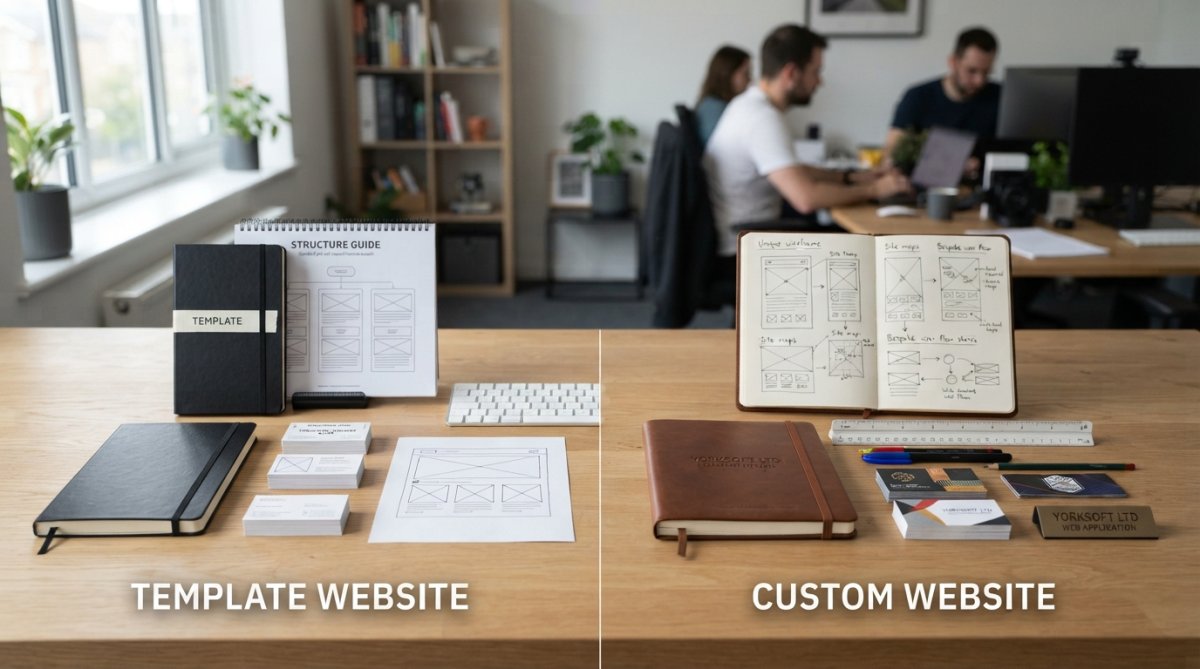
Web development services in Northampton range from freelancers handling small projects to agencies managing enterprise-scale platforms. The variation in quality is significant. Some agencies produce hand-coded, adaptive sites optimised for search engines. Others assemble templates and call it custom work. The difference shows immediately in performance, SEO rankings, and user experience.
Technical SEO matters more than most web development services acknowledge. A beautifully designed site that ranks nowhere is a marketing liability. YorkSoft Ltd integrates technical SEO from the start, proper site structure, semantic HTML, performance optimisation, and mobile responsiveness aren't afterthoughts but foundational decisions.
The cloud segment holds 61.65% of the application development market in 2026, meaning most modern web development relies on cloud infrastructure for scalability and reliability. This shift has democratised web development; you don't need to manage servers, but you do need developers who understand cloud architecture, containerisation, and deployment pipelines.
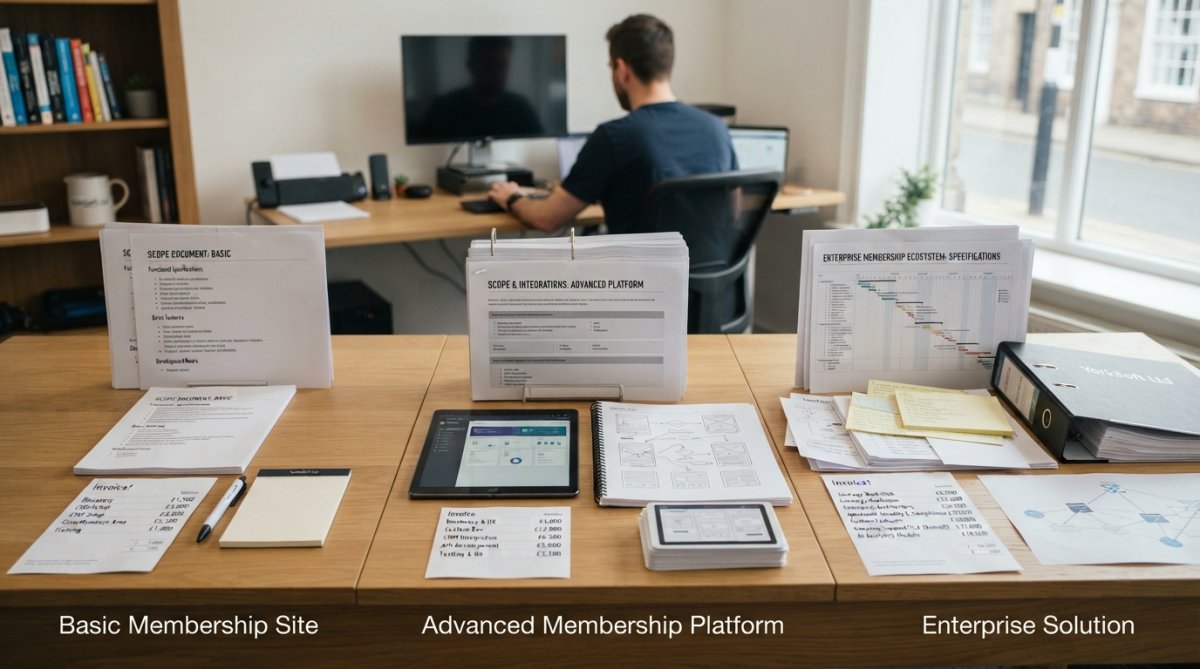
Web development costs depend entirely on scope. A static informational site requires less complexity than a web application with user authentication, real-time data processing, and API integrations. Don't compare prices across different project types; compare the actual deliverables and technical requirements.
Your choice between web development and custom applications hinges on specific business factors, not general preferences.

Integration requirements matter most. If your solution needs to connect seamlessly with existing systems, your retail management platform, accounting software, CRM, or inventory system, custom development becomes essential. Off-the-shelf platforms offer predefined integrations, but those integrations often work only in one direction or require manual data synchronisation. A custom application integrates natively, with data flowing automatically between systems.
Unique workflows are a second critical factor. If your business processes don't match standard industry patterns, off-the-shelf solutions force compromises. Professional associations managing memberships with complex hierarchies, automotive repair centres tracking labour costs against parts inventory, or e-commerce businesses with custom pricing logic all benefit from bespoke systems designed around their actual operations.
Scalability constraints reveal themselves over time. Off-the-shelf platforms scale to a point, then hit limits. Custom applications scale with your growth because you control the architecture. Cloud deployment means you're not constrained by server capacity; you're constrained only by application design.
Timeline pressure sometimes favours web development. If you need to launch quickly, off-the-shelf platforms move faster. Custom development takes longer because discovery, design, and testing are thorough. But "fast launch" only matters if what you launch actually solves your problem. A quick, wrong solution costs more than a slower, correct one.
Data security and compliance increasingly push organisations toward custom solutions. If you handle sensitive customer data or operate under specific regulatory requirements, custom development lets you implement security and compliance from the ground up rather than relying on a platform's generic approach.
Long-term ownership is underestimated. With custom applications, you own the code. You're not locked into a vendor's pricing, roadmap, or support model. If you need changes in five years, you can hire any developer to make them. With off-the-shelf platforms, you're dependent on the vendor's evolution.
Choosing a development partner matters as much as choosing the right technology approach. The wrong partner can turn a sound strategy into a failed project.
YorkSoft Ltd specialises in exactly this decision point. We work with managing directors of SMEs needing bespoke applications to automate manual processes, secretaries of professional associations managing complex membership and event systems, e-commerce business owners requiring custom integrations, and committee members of marine and sailing associations needing member management platforms. These are organisations where off-the-shelf solutions create more problems than they solve.
Our approach begins with understanding your actual business. Not the business you think you have, but the workflows, integrations, and constraints you actually operate within. This discovery phase reveals whether you genuinely need custom development or whether a configured web development solution would serve you better. We're honest about this because the wrong choice wastes your investment.
For custom applications, we build hand-coded solutions optimised for your specific requirements. No bloated frameworks, no unnecessary features, no vendor lock-in. The codebase is yours, documented and maintainable.
For web development projects, we focus on technical excellence. Adaptive design, semantic HTML, proper site architecture, and performance optimisation aren't optional extras, they're foundational. We integrate SEO and GEO strategies from the start, including rank monitoring, keyword analysis, and competitive AI analysis. Your site doesn't just look good; it ranks.
The complexity of multi-cloud and hybrid cloud environments continues to drive demand for custom solutions that integrate seamlessly across platforms. YorkSoft Ltd handles this complexity, managing API integrations, native-looking web applications for mobile devices, and cloud deployment strategies tailored to your infrastructure.
If you're uncertain whether your project needs custom development or web development services, that's exactly the conversation to have. Call us Now to discuss your requirements. We'll help you understand which approach delivers the best outcome for your specific situation.
The choice between web development and custom applications isn't theoretical. It determines whether your business operates efficiently or struggles against software constraints. Web development delivers when your needs align with standard patterns. Custom applications become essential when your business operates differently from the norm.
For organisations in Northampton managing unique workflows, complex integrations, or specialised operations, custom development typically delivers better long-term value. For straightforward web presence, e-commerce, or standard business functions, web development services often suffice.
The real question isn't which approach is "better", it's which approach matches your actual business requirements. YorkSoft Ltd has helped organisations across Northampton and beyond make this decision, implementing both web development projects and custom applications that genuinely transform how they operate. Whether you need a hand-coded, adaptive website optimised for search rankings or a bespoke application integrating your entire business workflow, the outcome should be technology that serves your business, not the reverse. Get in touch with YorkSoft Ltd to discuss your specific requirements and discover which approach will drive your digital transformation forward.
A standard website presents information and typically uses templates or pre-built platforms. A custom application is purpose-built software designed to solve specific business problems, integrate with your existing systems, and automate workflows. Custom applications offer flexibility that standard websites cannot match, especially for businesses needing database integration, member management, or complex automations. Web development vs custom applications depends on whether you need a presence online or a tool that transforms how your business operates.
Not all businesses need custom software, but many do. SMEs managing manual processes, professional associations handling membership databases, e-commerce businesses requiring retail system integration, and automotive centres seeking technical SEO performance often benefit from bespoke solutions. The UK custom software development market is growing at 16.5% annually through 2033, driven by increasing complexity in cloud and hybrid environments. If your business has unique operational needs that off-the-shelf tools don't address, custom software development is worth exploring.
Web development quality directly affects SEO performance. Hand-coded, adaptive sites with proper technical foundations rank better than bloated templates. YorkSoft specialises in technical SEO integration during development, including site speed optimisation, structured data, and mobile responsiveness. Poorly developed sites struggle to rank regardless of content quality. If local visibility matters to your business, your web development approach, whether standard or custom, must prioritise SEO from the start.
Custom applications typically require higher upfront investment because they're built specifically for your needs rather than adapted from templates. However, costs vary significantly based on complexity, features, and integration requirements. Off-the-shelf solutions have lower initial costs but may require workarounds or additional tools to meet your needs, increasing total cost of ownership. YorkSoft can assess your requirements and provide transparent guidance on investment versus long-term value for your specific situation.